Reading the age of a Flower Mound roof under the oaks
Flower Mound sits on Cross Timbers ground, and the Town describes the oak forest and native prairie in its local planning. Tree cover, open exposure and past roof work can affect different parts of a property differently. The useful question is how those conditions relate to the roof now.

Why the house’s age is not the roof’s age
A house built in 1998 could have had its covering replaced or repaired since construction. A storm, a sale or a planned reroof can change what is overhead without changing the age shown in a property listing. Decking can also be repaired during later work. Installation records, permits and invoices provide a better starting point than treating the house date as the date of every roof layer.
History helps frame an inspection, but present condition determines whether a repair can connect to sound material. The covering, flashing, supporting layers and spread of deterioration all matter. No brief look or age alone establishes the remaining service life.
What the trees do to a roof
Tree cover changes exposure. Shade can slow drying, while leaves and twigs can collect in a valley, at a wall or near an outlet and interfere with runoff. The effect depends on the canopy, debris, slope and drainage. The useful check is whether water can leave the roof and whether the covering beneath accumulated debris has deteriorated.
An open slope has different exposure to sun, heat, wind and impact. Conditions can vary across one roof, so a sound-looking section does not establish the state of every other area. Have the accessible slopes and details assessed together, including places where debris or overhanging branches affect the covering.
What a roofer reads on the shingles
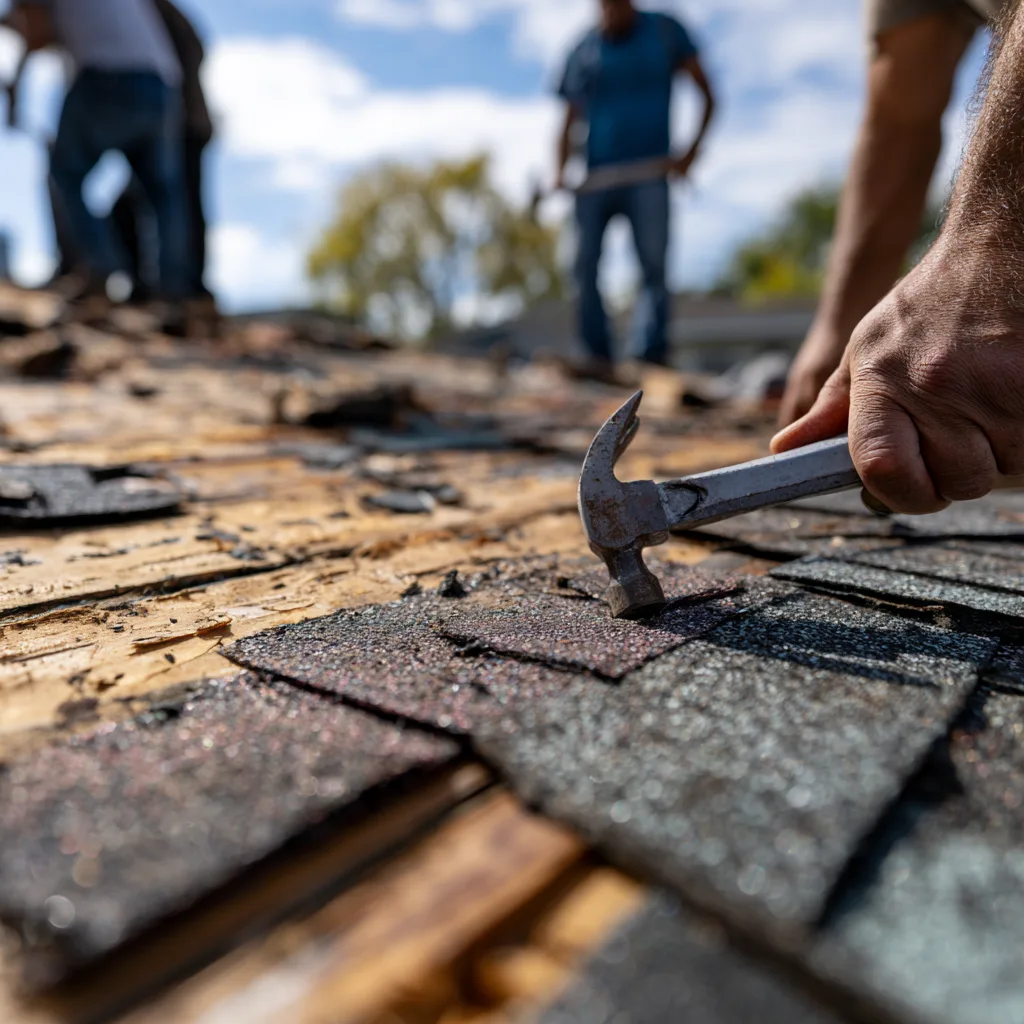
Granule loss needs context: its extent and any exposed or damaged shingle surface matter more than loose granules alone. Cracked or curled pieces, lifted edges and backed-out fasteners also deserve attention. Each can affect water shedding or the ability to reconnect a repair, but a single symptom does not determine the whole roof scope.
Surrounding shingles need to tolerate the work required to tie in new material. Brittleness can widen a repair boundary, while flexible material may make a local connection practical. Neither flexibility nor appearance promises years of remaining life. The roofer should explain the condition, limitations and alternatives supported by the assessment.
Repair, or the next roof
An isolated failed boot or flashing detail may support repair where surrounding material remains suitable. The roof repair page explains how that boundary is established. Widespread deterioration or a repair scope that reaches much of the roof can justify comparing replacement with further repairs. A recurring leak also needs its cause investigated; repetition alone does not prove replacement is necessary.
Bring any roof records you have, along with the concern you have noticed. You can request a free roof inspection without knowing the installation date. The aim is to understand the present condition and the work it supports.