Roof ventilation in Flower Mound, TX
A roof ventilation plan needs both a way for air to enter and a way to leave. Have the arrangement assessed with the roof and attic configuration.
Free roof inspections for homes and commercial properties.
Roof ventilation help in Flower Mound
Adding another roof vent does not automatically solve an attic heat or moisture concern. The intake openings, exhaust openings and the path between them need to work together. Insulation blocking an eave path can limit a vent that appears open from outside.
Ventilation is also different from insulation and air sealing. Warm, moist indoor air entering the attic is a separate issue from how outdoor air passes through it. The concern needs to be understood before selecting hardware.
Intake and exhaust have to work together
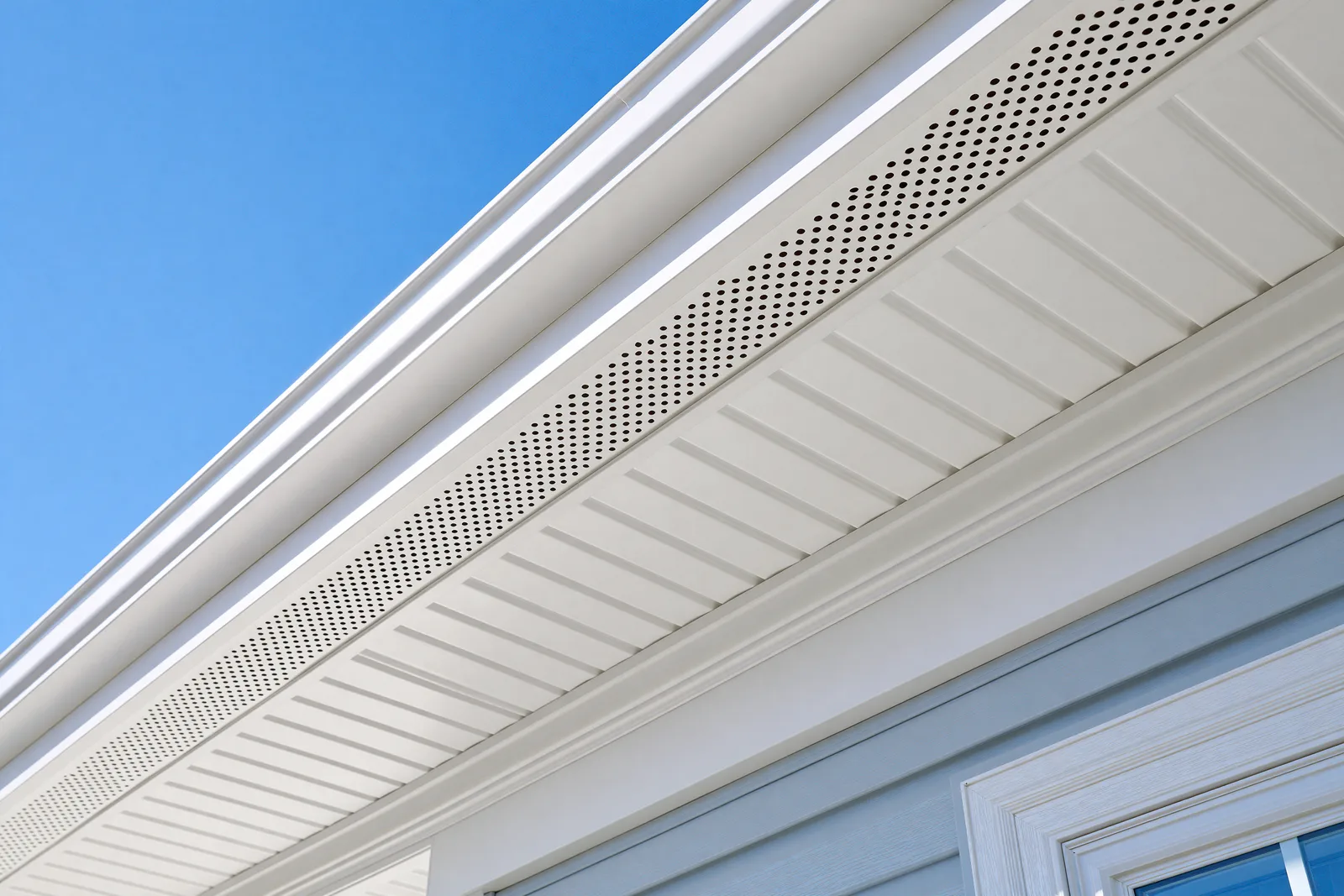
Intake at the lower roof
Outside air comes in low, through vents in the soffit under the eaves. Those vents only work if the path behind them is open. Insulation pushed out over the eaves will choke them, and baffles between the rafters are what hold that channel open.
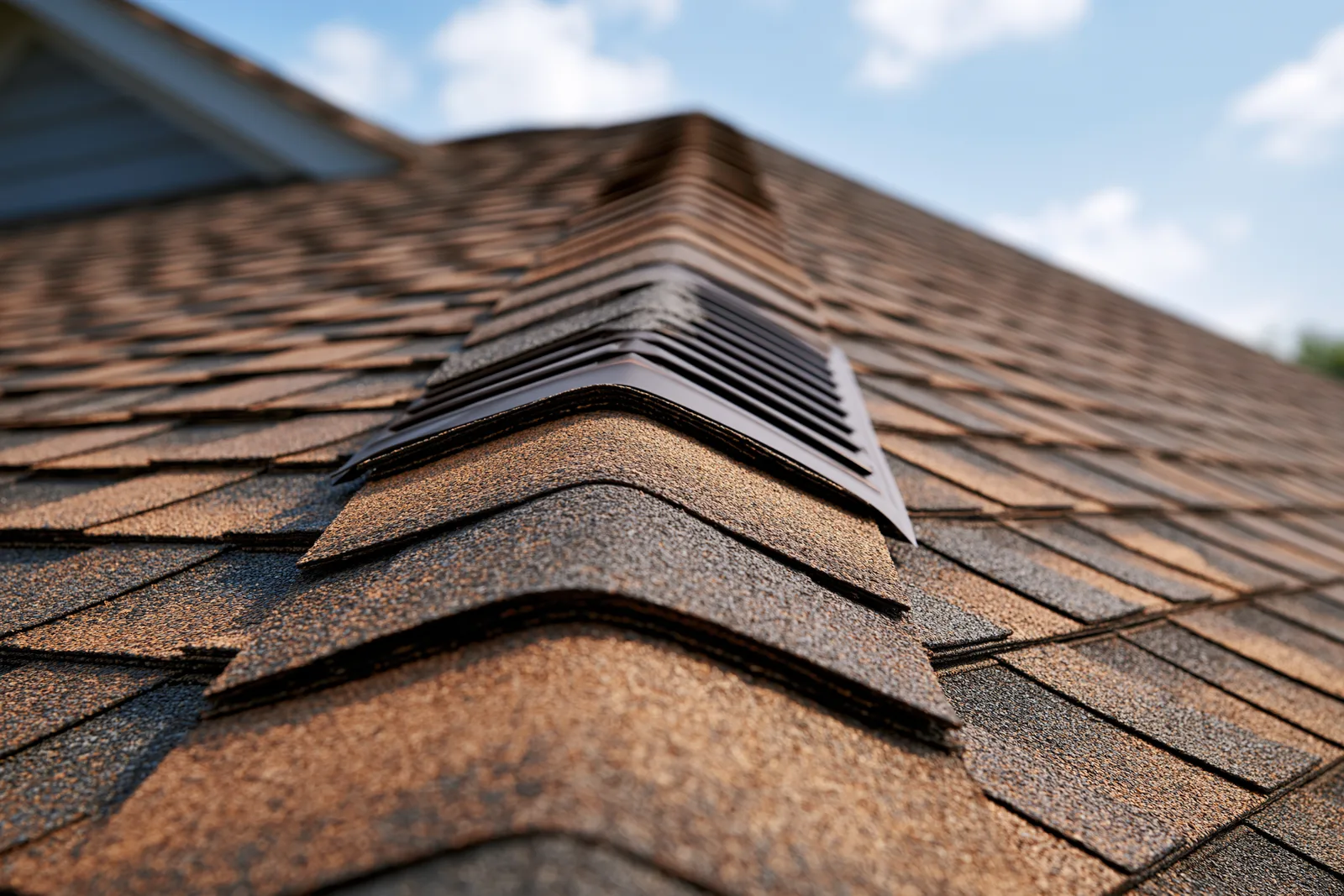
Exhaust higher on the roof
Warm air leaves high, through a ridge vent along the peak, box vents near it or a powered fan. Mixing types on one roof can backfire: a fan or a second vent type can pull air in through the nearest exhaust vent instead of up from the soffits, and the lower attic never moves.
A connected air path
Air has to be able to travel from soffit to ridge in every rafter bay. Hip roofs with short ridges, attics split by framing and rooms built over garages all break that path, and each needs its own answer. More exhaust without matching intake just starves the vents you already have.
Planning roof ventilation for a Flower Mound home
- Attic design
A vented attic, an unvented assembly and a vaulted roof are different systems. A generic vent count cannot describe all three.
- Existing moisture or heat concern
Roof leaks, indoor air leakage and insulation conditions can contribute. Ventilation work should not be used to cover up a different cause.
- Replacement timing
A new roof project is an opportunity to consider ventilation layout alongside ridge details and the selected manufacturer requirements.
Changing roof ventilation in Flower Mound
Ventilation work starts with the type of attic, because a vented space and a sealed roof assembly are designed differently. For a vented attic, the useful measurement is the open area available to move air through the intake and exhaust, with the path between them kept clear. A count of visible vents leaves out screens, obstructions and isolated roof spaces.
The roofer then matches the vent arrangement to the roof geometry and product requirements. A short ridge may not provide the same exhaust opportunity as a long uninterrupted peak. Intake blocked by insulation needs its air path corrected; adding another exhaust opening above it does not restore that route.
Installing a roof vent also creates an opening in the weather surface. The base, fasteners and surrounding shingles need proper water-shedding details. During replacement, those choices can be made while the roof is open; on an existing roof, material condition determines how the new work can tie in. Air sealing, duct problems or wet insulation may need separate attention if they are contributing to the concern.
Flower Mound roof ventilation FAQs
Will more vents lower my utility bills?
No specific energy saving is promised. Ventilation is one part of the roof and attic system; insulation, air leakage and the building itself affect energy use.
Can insulation block roof ventilation?
It can block the air path at the eaves in a vented attic. The arrangement needs to preserve the intended route without assuming every attic should be vented the same way.
Does every roof need a ridge vent?
No. The roof shape and attic design determine suitable intake and exhaust choices. A ridge vent is one option, not a universal solution.
Have the roof’s ventilation layout reviewed
Describe the ventilation concern or the roof replacement you are planning. A free roof inspection can start the conversation about the arrangement your roof needs.
Call (469) 240-3513