Roof replacement in Flower Mound, TX
When the shingles on a Flower Mound roof crack on every slope, replacement means the old roof off to the deck and a new system back on. What it includes, what it costs and how it goes.
Free roof inspections for homes and commercial properties.
When a Flower Mound roof is finished, and when it isn’t
Shingles that snap instead of bending when a roofer lifts a corner. Granules piling up in the gutters and bare black patches showing on the south slope. A repair bill for the same detail two summers running. That is what a finished roof looks like in Flower Mound, and the age of the house does not decide it: a 1990s house can be on its second or third roof, and a newer house can still be on the builder’s.
Plenty of roofs that worry people from the driveway still come down to a repair. The free inspection settles which one you have. When it is replacement, the job is the whole assembly, not just the shingles, and this page walks through what that means.
Signs a Flower Mound roof is past repair
These findings help define the scope. Their extent and the condition of the surrounding roof determine whether a focused repair or broader replacement makes sense.
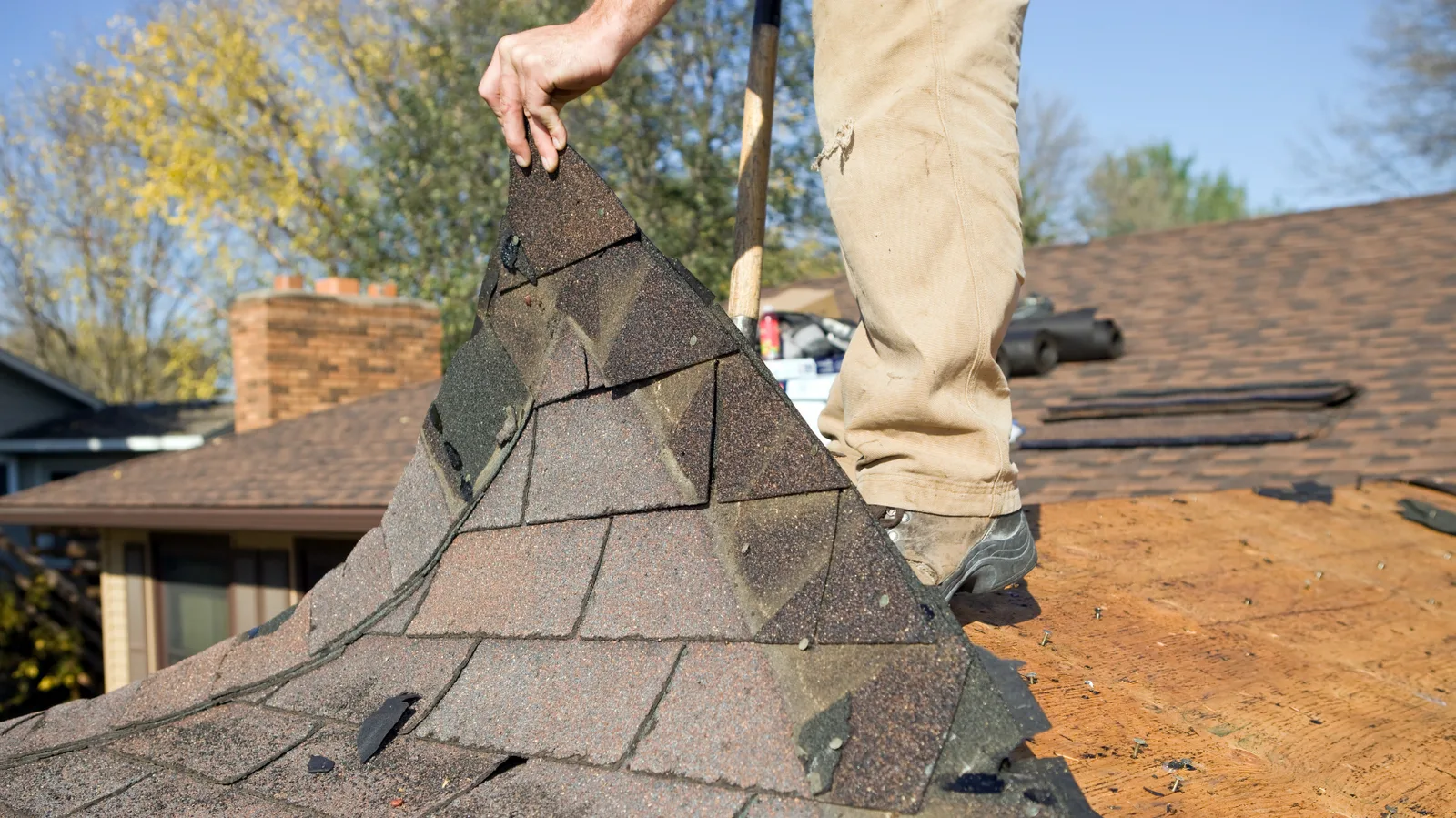
Shingles crack when lifted
A repair has to tie into the shingles around it. When they break instead of flexing, every patch has to grow until it finds material that holds, and on a badly aged roof that can be a whole slope.
Granule loss across whole slopes
Broad areas of exposed asphalt deserve closer examination. Granules protect the asphalt from sunlight, but loose granules in a gutter alone do not establish that every slope has failed. The pattern and condition of the shingles matter.
Repairs that keep coming back
A returning leak may mean the entry path or repair detail was missed. The surrounding roof should be examined before deciding that another repair is poor value. Repeated failures across deteriorated areas make a broader replacement comparison more useful.
Soft decking or daylight in the attic
Soft decking needs repair before it can securely support new roofing. Daylight visible through an unintended opening also needs investigation, but its location and cause must be established. Neither observation alone measures the condition of every slope.
What goes into a Flower Mound roof replacement
A new roof is several jobs done in order, and the shingles are the last of them. Here is what each layer does and what gets decided about it.

- Tear-off
The old shingles and underlayment come off down to the wood. Tearing off, instead of roofing over the top, is what lets anyone see the deck and the old flashing. If there are two layers up there, both come off, and that adds labor and dump weight.
- Decking
The deck is the plywood, OSB or plank surface the roof is nailed to. Sound decking stays. Sheets that are soft, delaminated or rotted from an old leak get cut out and replaced, because a nail driven into bad wood won’t hold a shingle in wind. How many sheets need replacing isn’t known until tear-off, so the price per sheet should be settled ahead of time.
- Underlayment and leak barrier
Underlayment covers the whole deck as a second line of defense under the shingles. A self-adhered leak barrier goes where water concentrates or backs up, such as valleys and around penetrations, as the product instructions and code call for. These layers are why a lifted shingle doesn’t always mean a wet ceiling.
- Flashing, valleys and pipe boots
Metal flashing carries water past walls, chimneys and skylights. Valleys collect runoff from two slopes and move more water than anywhere else on the roof. Pipe boots seal around plumbing vents. These are where leaks start, and replacement is the chance to renew them instead of shingling around tired metal and cracked rubber.
- Drip edge, starter and ridge
Drip edge metal sends water into the gutter instead of behind the fascia. Starter shingles seal the first course at the eaves and rakes, where wind gets its first grip. Ridge caps finish the peaks and hips. They’re small parts of the bill and a big part of how the roof handles wind.
- Ventilation
A vented attic needs intake low at the soffits and exhaust high near the ridge. With the roof open, a ridge vent can be cut in or old box vents replaced, and the two can be balanced. New shingles alone won’t fix an attic that can’t breathe, which is why roof ventilation belongs in the replacement conversation.
Choose a roof system, then its appearance
Architectural shingles and standing seam metal go on differently, cost differently and suit different slopes. The materials guide compares them as roof systems before color becomes the only question on the table.
Impact ratings belong to particular shingle products, not to a style. A layered architectural shingle is not automatically a Class 4 shingle. Slope, the manufacturer’s instructions and any association rule on appearance narrow the choice from there.

Roofing materials for a Flower Mound roof replacement
These three choices have different prices, different installation rules and different answers to hail.
Architectural shingles
Two bonded layers give these shingles their shadow lines and more weight than an old three-tab. They’re the standard choice for a pitched roof, they come in the widest range of colors, and they set the baseline price the other options get compared with.
Class 4 impact-rated shingles
Class 4 is the top rating in the UL 2218 impact test, where a steel ball is dropped on a new shingle. It’s a meaningful upgrade in hail country and it costs more. It doesn’t make a roof hail-proof, and whether your insurer prices it differently is a question for your agent. The shingle guide explains how style and rating differ.
Standing seam metal
Metal panels with raised, concealed-fastener seams cost more up front and need careful detailing at valleys, walls and penetrations. Hail can dent the panels without making them leak. Metal roofing covers the panel systems and the slopes they suit.
How roof replacement work comes together
Weather and the size of the roof set the pace, but the order of work doesn’t change much from house to house.
Get the property ready
Shingles are delivered and a dump trailer or container goes in the driveway, so cars need to come out of the garage first. Tarps and plywood protect landscaping, AC units and windows below the eaves. Tear-off is loud and shakes the house a little, so it’s worth taking down anything fragile hanging on upstairs walls. The reroof permit is in place before work starts.
Tear off and check the deck
Tear-off is sequenced around the forecast, available protection and the area that can be rebuilt safely. Once the deck is exposed, unsuitable sheets and failed details are identified for replacement before the next layers go on.
Dry in and rebuild
The dry-in stage uses the specified underlayment, leak barriers and temporary protection to manage exposure while work proceeds. Installation limits, weather and unfinished connections still matter. Flashing, drip edge, starter, field shingles, vents and ridge caps complete the water-shedding system.
Finish and clean up
Flashings and penetrations get a last look, gutters are cleared of granules and debris, and a magnet goes over the lawn and driveway for dropped nails. Any inspection the Town requires under the permit follows the work.
Planning the cost of a new Flower Mound roof
Roof area, pitch, materials, removal and access all affect the price. The roof cost tool provides a regional planning range with its assumptions visible. It is not a measured quotation for your property.
Deck repair, complex flashing and extra old layers can move the final amount. Product and workmanship warranties should also be understood separately; neither a product label nor a planning range defines every term of the job.
- Roof size and pitch
Price follows the surface of the roof, not the floor area of the house. A steep roof has more surface than a low one over the same rooms, and it takes longer to work on safely.
- Layers to remove
One layer of shingles is a normal tear-off. A second layer underneath means more labor and more weight at the dump.
- Cut-up rooflines
Every valley, dormer, chimney, skylight and wall junction adds flashing work and cut shingles. A simple gable roof costs less per square foot than a roof with a dozen planes.
- Decking
Replaced sheets are priced individually. A roof with a history of leaks tends to need more of them.
- Material
Impact-rated shingles cost more than standard architectural shingles, and standing seam metal costs more than either.
- Access
A two-story house, a tight lot or a roof that materials can’t be loaded onto directly adds handling time.
The cost tool’s range is a regional planning figure. A price for your roof comes from measuring it.
Flower Mound roof replacement FAQs
Does Flower Mound require a reroof permit?
Yes. The Town’s residential guidance requires a permit for roof replacement and compliance with its adopted codes. The permit guide explains where that requirement fits.
Can the new roof go over the old one?
It can be done on some roofs, but it hides the deck, which is the part most likely to have gone soft, and it puts new shingles over old flashing. A tear-off is the only way anyone sees what the roof is nailed to. The permit guide covers what the Town asks for on a reroof.
How long does a roof replacement take?
Size, pitch, removal, deck repairs, access and weather affect the schedule. Discuss the expected sequence and how opened areas will be protected if work is interrupted. A forecast or concealed damage can change that sequence.
What happens if rotted decking turns up during tear-off?
It gets replaced before the new roof goes over it. Shingles nailed into soft wood won’t stay put. Because nobody can count bad sheets until the old roof is off, the per-sheet price should be agreed before the job starts so the final number isn’t a surprise.
Can I stay home during a roof replacement?
Often, but confirm that with the roofer for the actual scope. Noise, vibration, access and any structural or interior work can change the answer. Keep people clear of falling-material areas and discuss where vehicles, pets and fragile belongings should be during the work.
Start planning your new roof
Tell us what the roof is doing that made you think about replacing it. A free inspection connects the condition of the roof to the material, scope and budget decisions ahead.
Call (469) 240-3513