Roofing services in Flower Mound
Find roofing help for a leak, damaged shingles, a planned replacement or a roof detail that is no longer working.

Free roof inspections for homes and commercial properties.
Flower Mound roofing services, from leaks to a new roof
You can start with the problem you have noticed. A ceiling stain belongs in a leak conversation. Loose or missing roofing calls for an assessment of the damaged area and the surrounding material. If the roof is deteriorating more broadly, replacement deserves a closer look.
These services connect those starting points to the work involved. You do not need to choose a repair method before requesting a free roof inspection. The roof’s actual condition gives the decision its shape.

Residential roofing services in Flower Mound
A leak or damaged roof detail
A missing shingle, a split pipe boot and flashing pulled away from a wall are three different repairs. Each one gets fixed the same basic way: open the roofing around it, replace the failed piece and lap the new material back into the courses that stay. That works when the shingles next to it still bend without cracking.
A ceiling stain is a different starting point, because water can run along the decking or a rafter before it drips. Leak repair starts by tracing that path back to the opening. If rain is coming in right now, temporary cover limits the damage until weather and safe access allow the lasting repair.
A roof ready for a closer look
A free roof inspection puts a roofer on the roof to look at the shingles, flashings, valleys and edges before you commit to anything. It ends one of three ways: a failed detail to repair, a larger worn area to plan for, or nothing that needs work right now.
After hail or strong wind, the inspection looks for what the storm did to this roof: bruised or creased shingles, dented vents and flashing, loosened edges. A hail report tells you when to look. It can’t tell you what happened on your roof.
Planning the next roof
When shingles are cracking across several slopes, or new repairs keep landing next to old ones, replacement becomes the better use of the money. The old roofing comes off down to the wood deck, soft boards get replaced, and underlayment, flashing, vents and shingles go back on as one system. It’s the one time every connection on the roof is open and can be corrected.
Material is its own decision. Architectural shingles, impact-rated shingles and standing seam metal install differently, cost differently and suit different slopes. Association appearance rules can narrow the choice too.
The edges and connections around it
Some roof problems live at the edges. Gutters have to catch water from the drip edge and carry it away from the house. Chimney flashing has to bridge brick and shingles as both move. A low-slope porch or addition needs a membrane with sealed seams, because shingles can’t shed water on a pitch that shallow.
Attic ventilation belongs here too: intake at the soffits and exhaust near the ridge, working as a pair. Any of these can be handled on their own, and all of them are easier to correct during a replacement while the roof is open.
From a Flower Mound roof inspection to a scope of work
Every job on this page starts the same way: a roofer gets on the roof and looks. What they find decides whether you’re talking about an afternoon repair or a new roof, and it decides what goes on the estimate.
Here’s how that look turns into a list of work you can read and say yes or no to.
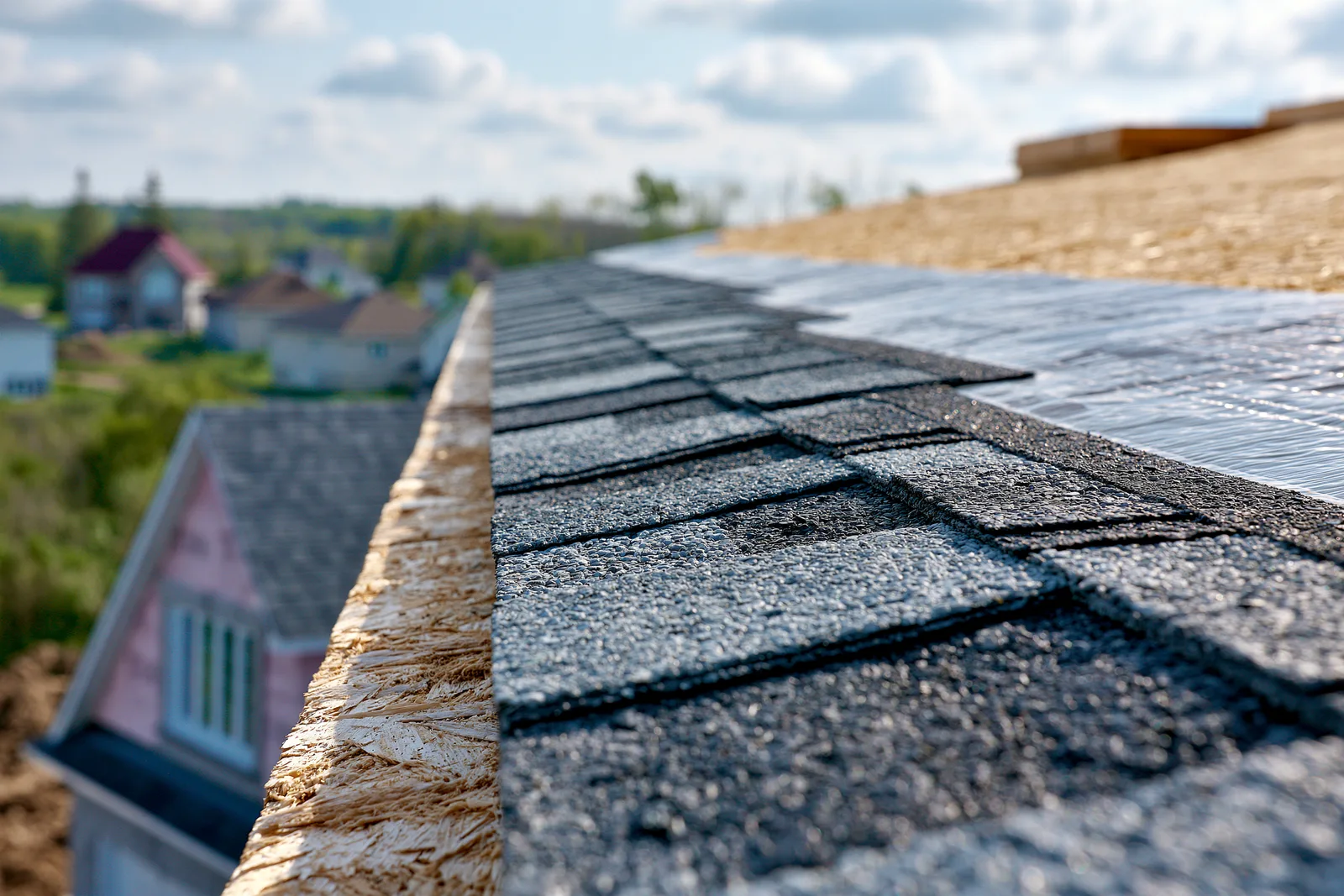
The roof gets walked
The free inspection puts a roofer on the roof when it’s safe to climb. They check the shingle field for cracking, lifting and lost granules, then the places leaks start: pipe boots, valleys, wall and chimney flashing, vents, ridge caps and eaves. What you noticed from inside the house tells them where to look hardest.
The problem gets a size
A split boot on a roof with flexible shingles is a small repair. The same boot surrounded by shingles that snap when lifted is a bigger one, because the repair has to reach material that can still be worked. Wear on every slope points toward replacement. Sizing the problem honestly keeps a sound roof from being replaced and a worn-out roof from being patched again.
The visible work gets listed
A scope of work names what comes off, what goes on and where. For a repair, that’s the area opened up, the boot or flashing replaced and the shingles tied back in. For a replacement, it’s tear-off, underlayment, flashing, drip edge, vents, ridge caps, cleanup and hauling. Those line items show what a price includes.
The hidden work gets an allowance
Nobody can see the wood deck until the shingles are off. Soft or delaminated decking has to be replaced before new roofing is nailed to it, so a replacement scope handles it with a price per sheet of decking instead of a guess at the total. A repair that uncovers wet wood works the same way: the cost of that extra work should be settled before the roof is opened.
You decide with the work in front of you
With the work listed, the choice gets simpler. You can weigh a repair against a replacement by what each one fixes and what it leaves alone, and see how the material moves the price. The roof cost tool gives a planning range before anyone measures, and the warranty guide explains why product coverage and workmanship coverage are two separate things.
The inspection is a roof walk. Decking, underlayment and insulation stay covered until work begins, which is why the allowance matters.
Commercial roofing services in Flower Mound
A commercial roof protects inventory, tenants and equipment, so a leak is an operating problem before it’s a roofing one. On a low-slope roof, the places to check first are where the membrane is interrupted: seams, equipment curbs, drains, pipes and the parapet edge. Once water is under the membrane it spreads through the insulation, which is why the wet area can be much larger than the opening.
That’s what sorts a building into repair, restoration or replacement. A dry, well-attached roof with one failed detail gets a repair. A sound roof with a worn surface can be a coating candidate once its seams and flashings are fixed. A roof with widespread wet insulation needs a recover or tear-off, and the insulation, drainage slope and edge metal become part of the job.
Work on an occupied building has to be planned around it: hoist access, where debris comes down, rooftop units that still need servicing, odors near air intakes and hours when noise is a problem. The commercial roofing hub walks through those decisions for Flower Mound owners and property managers.
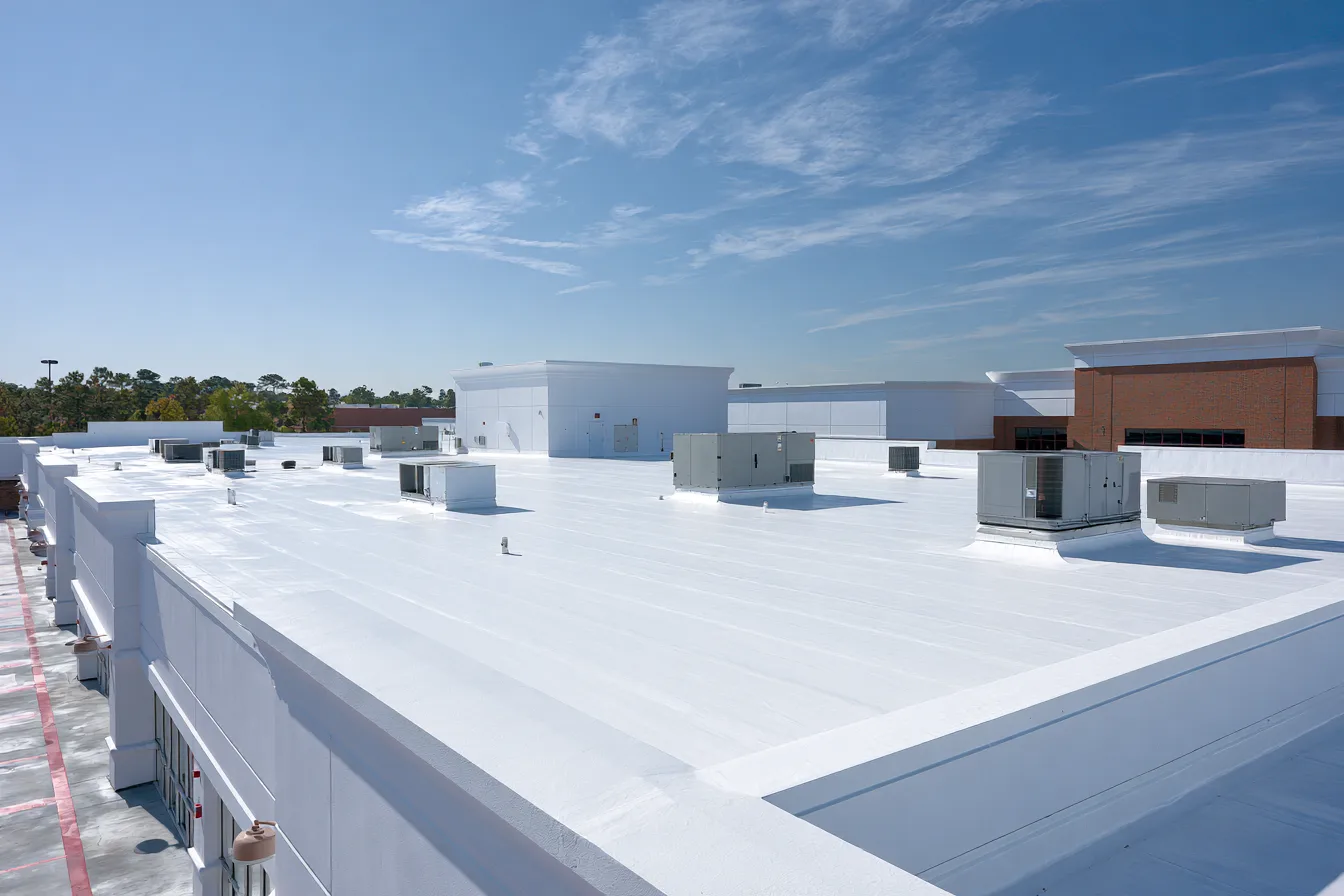
Commercial TPO roofing
TPO is a white single-ply membrane used on low-slope commercial buildings. Its seams are heat welded, so a real repair means cleaning the sheet and welding compatible membrane, not spreading sealant. This page covers seam and flashing repairs, wet insulation under the sheet, and when a recover or replacement makes more sense.
Commercial flat roofs
Ponding water, blocked drains, open flashing at a rooftop unit and wet insulation each call for different work. This page covers how a leak gets traced on a low-slope building, what a repair has to remove, and how work is staged around tenants, deliveries and equipment service.
Commercial roof coatings
A coating can restore the surface of a roof that is still dry and well attached. It can’t rescue one with wet insulation or failing seams. This page explains how a roof qualifies, the cleaning, seam work and adhesion testing that come first, and how acrylic and silicone systems differ.
Tell us which part of the roof needs help
Describe the condition you noticed or the project you have in mind. Start with a free roof inspection and a clearer view of the work ahead.
Call (469) 240-3513